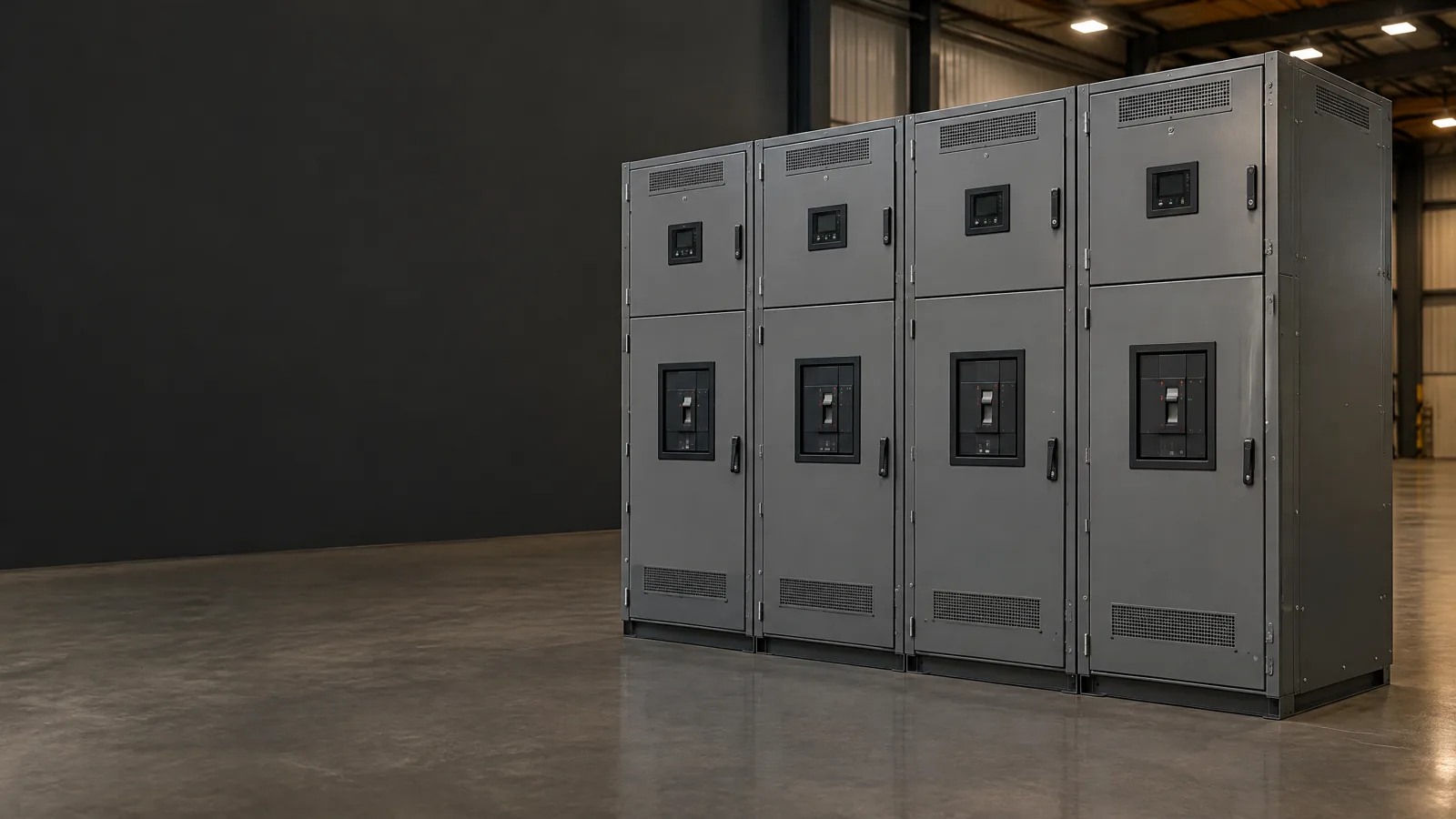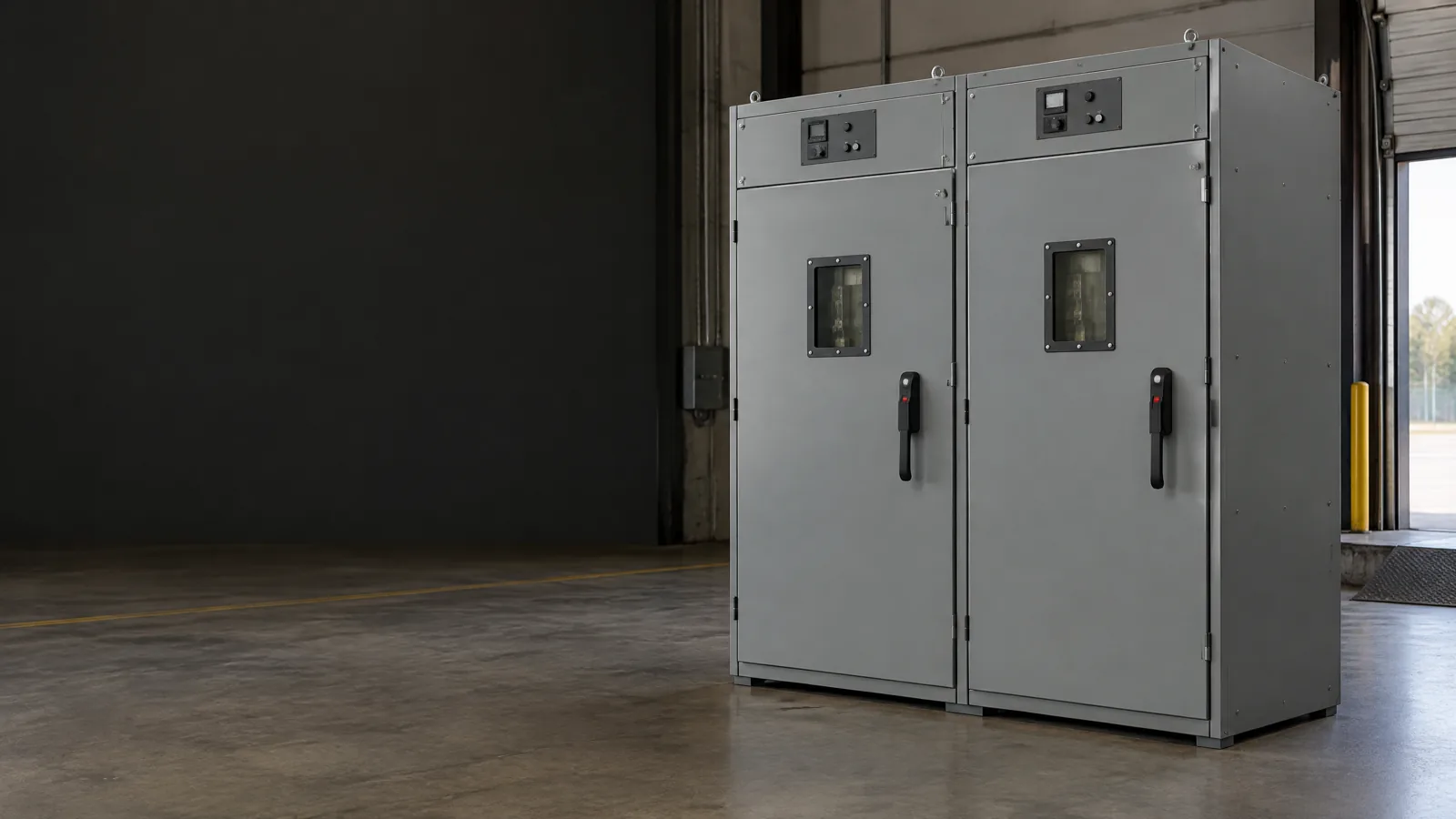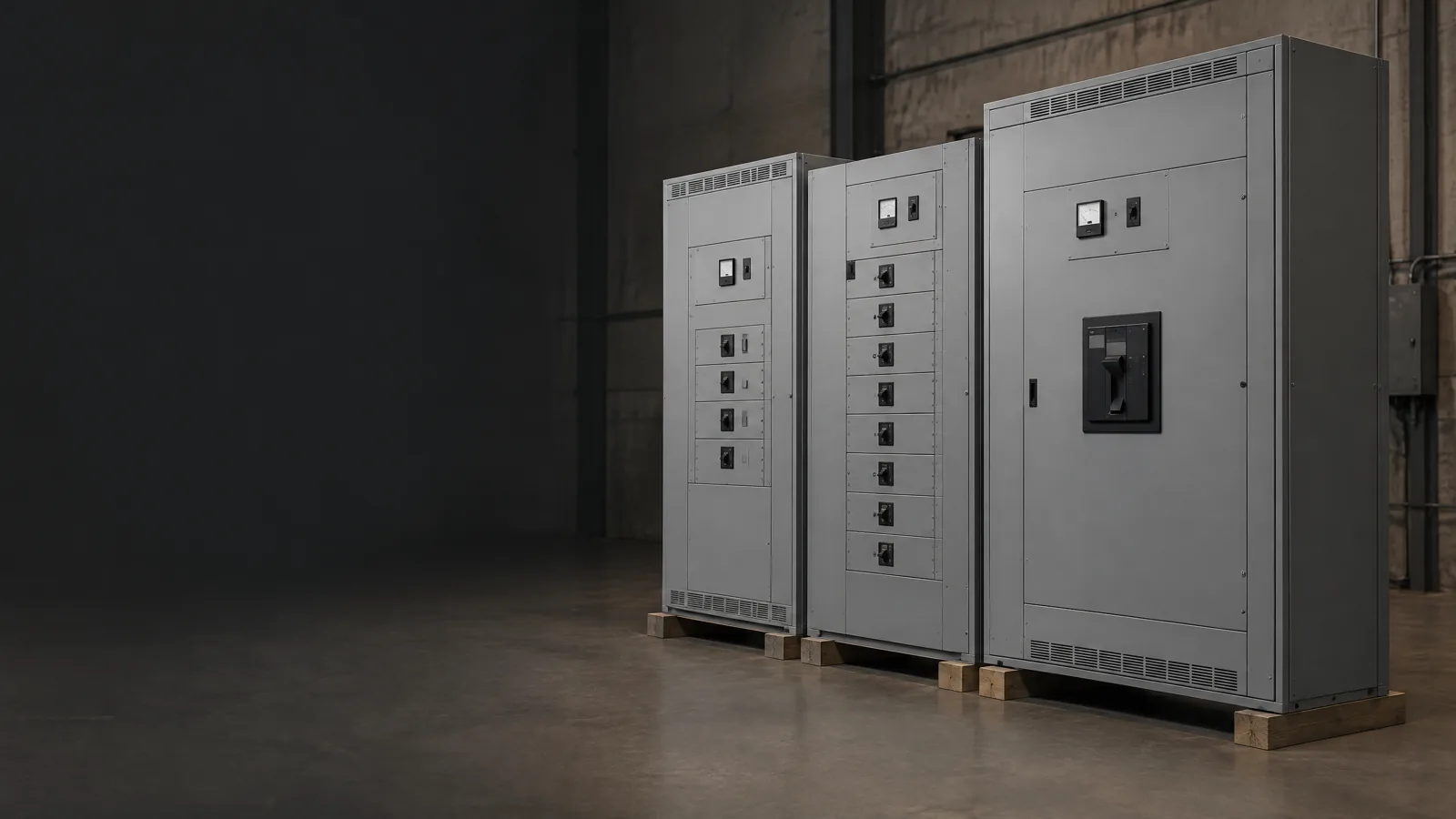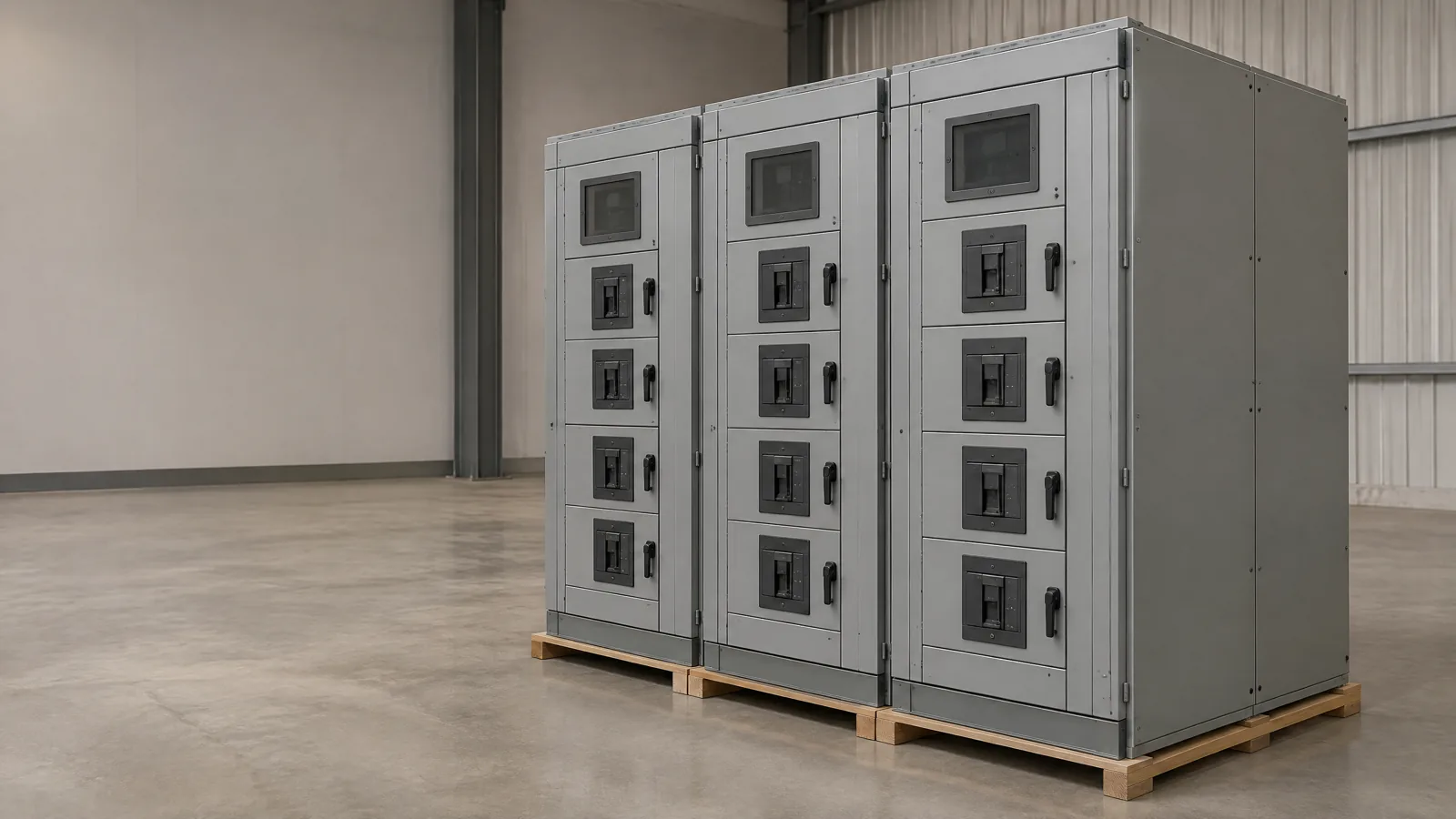
800 & 1200 Amp Switchgear Buyers
Have surplus distribution equipment described as 800 amp or 1200 amp? Surplus Valve Buyer is a Houston-based independent surplus buyer. We buy eligible equipment from sellers with unused project gear, retired assemblies or spare breakers. Start with what the amperage actually identifies: the assembly bus, a main breaker, a feeder or the breaker frame. That distinction helps us discuss the right equipment without treating every cabinet marked 800A as the same product.
What does the 800A or 1200A label identify?
An 800A breaker in a distribution section does not establish an 800A main bus rating. The main bus is the assembly's common current-carrying distribution path; individual protective devices have their own ratings. A main device controls incoming power, while a feeder supplies a downstream circuit. Tell us which label you are reading rather than describing the entire lot by the largest number visible.
Eaton's front-access Magnum DS guide illustrates the distinction: its product offering lists 2000–6000 A bus and 800–6000 A breakers separately. Those are documented family ranges, not automatic purchasing criteria. If your surplus includes an 800A feeder from a larger lineup, describe it as that feeder and identify whether its section or drawout cradle is included.
Switchboards are not automatically UL 1558 switchgear
The word switchgear is often used broadly in a seller's description. For this enquiry, the manufacturer's assembly identification matters. Eaton identifies Pow-R-Line Xpert as a UL 891 switchboard, while its Magnum DS documentation includes UL 1558 low-voltage switchgear. Report the listing actually shown on your equipment; an amp rating alone does not establish the assembly standard.
An 800A or 1200A main breaker may belong to a switchboard rather than a UL 1558 lineup. Drawout construction is not conclusive either: manufacturer documentation includes drawout devices in switchboards. We can discuss eligible switchboards and individual breakers as their own equipment categories, without relabeling them to match a search phrase.
Separate breaker frame, sensor and trip rating
A breaker frame number is not a complete description of its installed current rating. Schneider Electric identifies PowerPacT M-frame as an 800 A frame and P-frame as a 1200 A frame. Its catalog defines frame size as the maximum ampere rating of the family, with the sensor size no greater than that frame size.
For the catalog's MicroLogic breakers, the ampere rating depends on sensor size multiplied by the rating-plug setting. A 1200 A frame therefore does not, by itself, tell a buyer the configured long-time rating. Include the complete catalog number, sensor marking and trip-unit model when known. Report existing settings from records; do not change plugs or adjust protection to make surplus appear to have a different rating.
Keep system voltage separate from maximum ratings
Nominal system voltage describes the supply application; a maximum equipment voltage rating describes a different limit. Eaton's Magnum DS voltage table, for example, pairs a 480 V system with a 508 V maximum rating. These are related entries for that documented design, not interchangeable descriptions or evidence that your particular assembly has either rating.
Give us the assembly voltage and breaker voltage separately, along with phase and wire configuration if documented. Do not assume an 800A or 1200A item exists in every voltage class. A family catalog covering several voltages and current ratings is not proof of every possible combination, and it does not replace your equipment's nameplate.
Fault ratings are not continuous bus amperes
Continuous bus amperes describe sustained current capability. A breaker interrupting rating describes fault current it can interrupt at a specified voltage. Assembly short-circuit ratings and short-time withstand ratings also need their own labels and context. Do not convert a 65 kA marking into a load rating or assume a breaker rating applies to the whole cabinet.
Voltage matters here too: Schneider's PJ breaker table lists 65 kA interrupting at 480 Vac and 25 kA at 600 Vac. These are model-specific examples. If documentation lists BIL, keep it separate: basic insulation level concerns impulse-voltage withstand of insulation, not normal operating voltage, continuous amperes or fault-current interruption.
Define exactly what stays with the lot
A complete distribution assembly, a single feeder section and a loose breaker are different sale descriptions. For a lineup, identify the number of sections and which mains, feeders and metering devices remain. For a breaker, identify whether the sale includes its matching cradle, mounting parts and accessories. Do not describe an empty compartment as a complete breaker position without explaining what is missing.
Keep job drawings, manufacturer order information and any available equipment schedules with the enquiry. Eaton distinguishes space-only compartments from provisions that include connectors and mounting hardware. That difference is useful when selling unused project sections or gear with future spaces; a cabinet's empty space does not prove installation hardware is present.
Describe condition without claiming unverified testing
Tell us whether the equipment is unused surplus, previously installed, already removed or still awaiting retirement. Disclose known water exposure, corrosion, cracked insulation, missing trip units or modifications. If you have maintenance or test reports, identify their date and the equipment they cover. A report for one breaker should not be presented as proof that every section was tested.
Unknown condition is worth stating plainly. You do not need to energize equipment to begin a selling conversation. Existing records and a clear lot description help establish what needs further review. Condition, completeness and suitability must be considered before eligibility and purchase terms are confirmed.
Leave decommissioning to qualified electrical personnel
Do not open energized cabinets, rack breakers or perform live tests to prepare a sales enquiry. Use existing records and safely accessible exterior identification. Any shutdown, isolation, internal inspection or removal belongs with qualified electrical personnel following the site's procedures and applicable safety requirements.
OSHA requires appropriate lockout or tagging and qualified-person verification before exposed equipment is treated as de-energized. Merely moving a handle to off is not evidence that all sources or backfeeds are isolated. If the lot is still installed, tell us its status and planned release date. Removal responsibilities and handling arrangements must be agreed for the specific sale.
Discuss selling your equipment to Surplus Valve Buyer
Call (951)403-5738 or email industrial832@gmail.com with a brief description of your 800A or 1200A lot. Include the manufacturer, known model, quantity, location and whether it is a switchboard, switchgear assembly or separate breaker. If the exact category is uncertain, say which markings you already have rather than guessing.
Surplus Valve Buyer is the buyer; you are offering equipment for sale. Photos are not required to start the conversation. We will discuss whether the lot is eligible and what further details are needed. Purchase terms, release timing and any loading, removal or transportation responsibilities are confirmed individually, not promised by the amp rating.