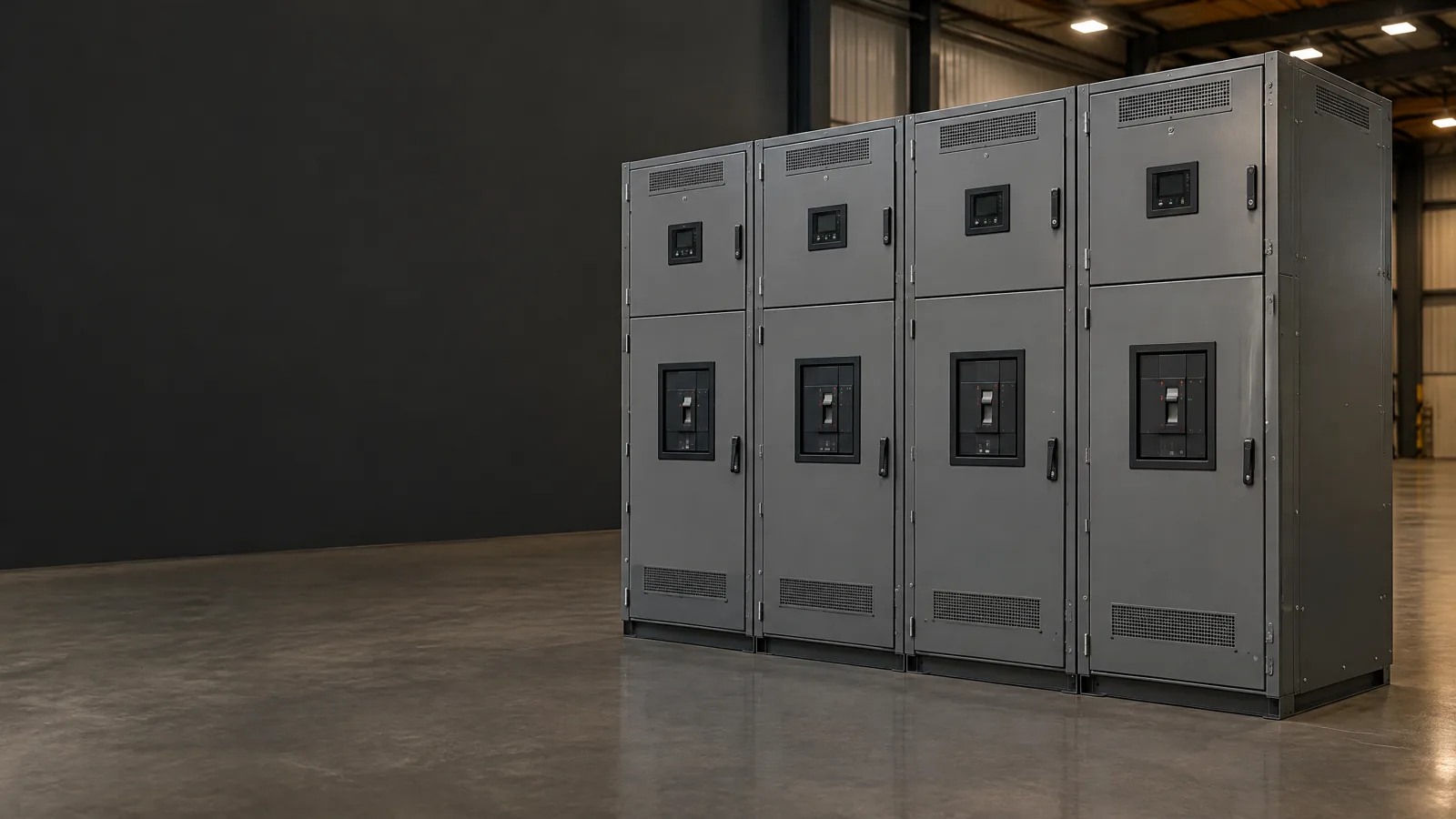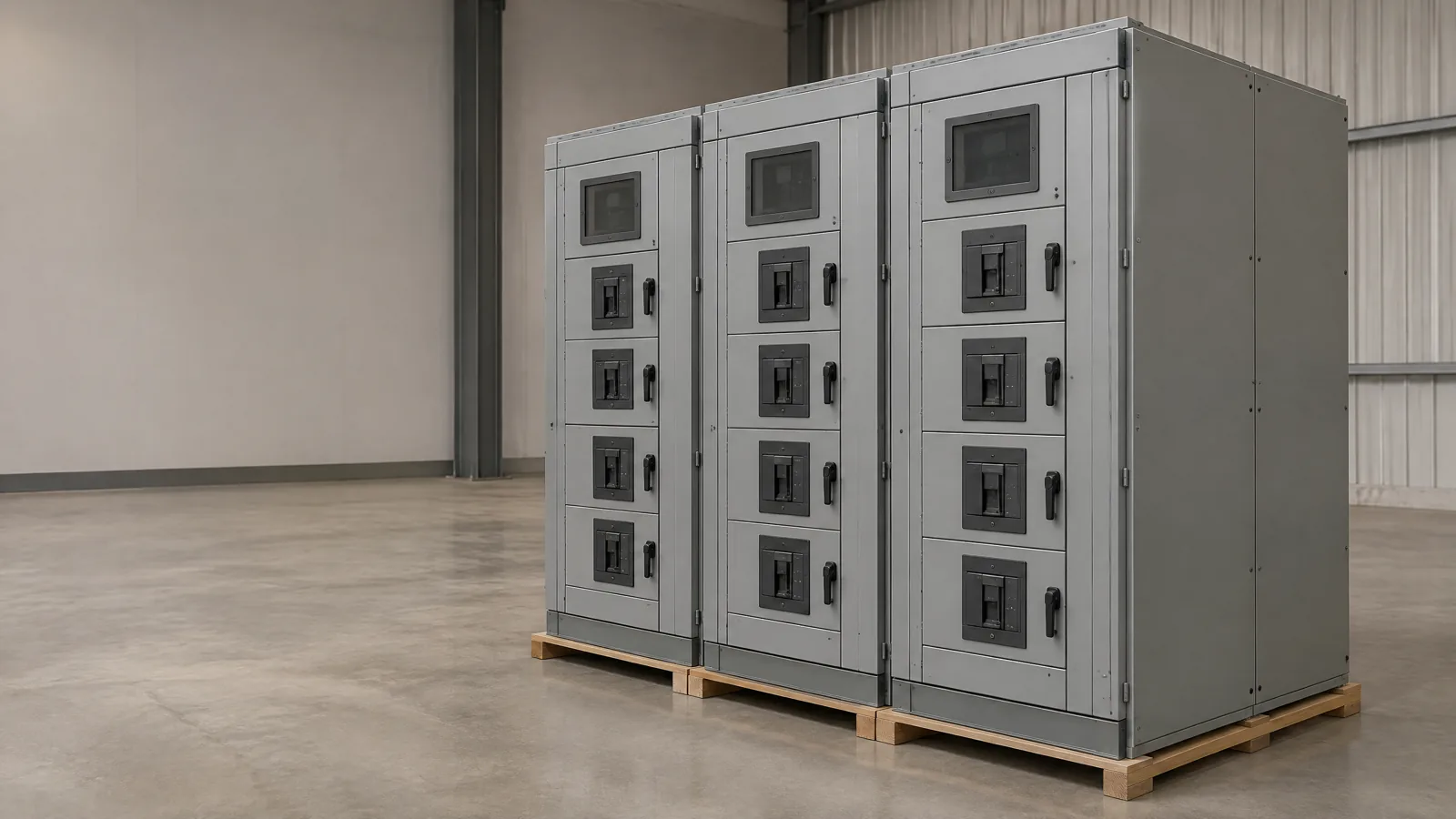
480-Volt Switchgear Buyers
Looking for 480-volt switchgear buyers after a facility upgrade or canceled project? Surplus Valve Buyer is a Houston-based independent surplus buyer. We buy eligible used and surplus switchgear, with acceptance and purchase terms confirmed for each lot. Tell us what you own, where it is located and whether it is removed or awaiting qualified decommissioning. A complete lineup description is more useful than calling everything in the electrical room 480V equipment.
Sell the lineup you actually have
Describe whether you are selling an assembled lineup, separated shipping sections or individual breakers from the gear. Identify the manufacturer, product family and section count from existing records. Main, tie and feeder sections are not interchangeable descriptions: the buyer needs to understand what remains together and what has already been removed.
Use the equipment's own designation. Low-voltage power circuit breaker switchgear and a switchboard can both serve a 480V installation, but that does not make them the same product. Share the assembly label or original drawings when available rather than renaming a switchboard as switchgear to match a search term.
Keep 480Y/277 and 480 delta distinct
A solidly grounded 480Y/277V wye system has nominal 480 volts between phases and 277 volts from phase to neutral. A 480V delta description identifies a different system configuration. Report the original system and grounding information from drawings when known; do not erase the Y/277 marking because both descriptions include 480.
Slash-rated protective devices have application limits tied to both voltage values. They are not automatically substitutes for straight-rated devices on a delta system. Schneider Electric's Multi 9 guidance specifically distinguishes its 480Y/277V rating from 480V delta. Preserve the actual installed breaker markings so the lot is represented accurately; reuse suitability requires a separate technical review.
Separate nominal voltage from maximum ratings
The facility's nominal system voltage and the assembly's maximum voltage rating describe different things. Record both rather than converting a site description into an equipment rating. Eaton's Magnum DS technical data, for example, pairs a 480V system with a 508V maximum in a particular breaker interrupting-rating table. That table does not establish every switchgear assembly's maximum rating.
Keep control-circuit voltage separate as well. A spring-charging motor or trip circuit voltage is not the main power-circuit voltage. Never infer the switchgear rating from a nearby transformer's nameplate, secondary voltage or capacity. Use the gear's own assembly documentation and identify any missing rating as unknown.
Record bus amperes, frame and trip separately
Continuous main bus amperes identify the assembly's documented current-carrying rating. A breaker frame size, sensor rating, rating plug and adjustable trip setting are separate information. For example, Eaton lists multiple sensor and rating-plug options within a 1600A Magnum DS frame. Seeing 1600A on a breaker does not establish the lineup's bus rating or its present trip configuration.
For a sale inquiry, copy the assembly bus rating and identify the main, tie and feeder breakers individually. Include catalog numbers and trip-unit descriptions from records you already have. Do not total feeder ratings to create a bus rating, or describe a frame's maximum as the installed trip rating.
Provide fault-rating evidence, not a guessed kA
Breaker interrupting capacity is the fault current the protective device is rated to interrupt at a specified voltage. Assembly short-circuit withstand and short-time withstand are different ratings. Short-time withstand includes a duration. Send the relevant voltage and time alongside any kA value instead of reducing every fault-duty marking to one number.
A high-rated main breaker does not prove that every feeder or the complete assembly has the same rating. Preserve manufacturer tables and assembly labels. Insulation evidence also stays separate: Eaton's technical specification distinguishes maximum service voltage from a higher dielectric-test voltage. Do not substitute that test voltage for operating voltage, or invent a BIL entry where documentation provides none.
Describe data-center and manufacturing removals
Low-voltage switchgear serves critical power and process applications, including data centers and manufacturing facilities. If your lot came from a capacity expansion, production-line change or electrical-room replacement, explain which sections belong together. Existing one-line drawings can clarify the original main-tie-main arrangement and distinguish a complete lineup from selected feeder sections.
State the removal date, storage conditions and known reason for retirement. Report water exposure, overheating, fault damage or modifications rather than describing all removed gear as working. Equipment removed during an upgrade is not automatically tested or ready for reuse. Maintenance records can provide context, but they do not replace verification of the equipment being offered.
Keep matching parts and records with the lot
Tell us which breakers remain installed, which have been removed and whether empty cells were originally spare positions. Note missing doors, barriers, drawout mechanisms or shipping-split connections. These details let the buying discussion address the actual equipment instead of assuming the lineup is complete because its outer enclosures remain.
Keep existing section identifiers, breaker schedules and drawings associated with the correct pieces. Catalog numbers help distinguish similar-looking breakers; physical appearance alone does not prove compatibility. Do not dismantle the gear merely to prepare a sale inquiry. Describe uncertain or missing components openly, and let any further inspection be planned safely by qualified personnel.
Discuss eligibility and terms before moving equipment
A useful first inquiry identifies the 480V equipment you own, its location and what is included in the sale. A complete documented lineup, one removed section and loose spare breakers represent different lots. Their condition, identity and completeness must be considered separately. Surplus Valve Buyer discusses your actual equipment before confirming purchase eligibility, price or transaction terms; a voltage number alone does not determine the outcome.
Explain whether you control the sale, what equipment is included and where it is accessible. Discuss inspection, payment, loading and transport responsibilities before committing to a transaction. Do not assume freight is covered or removal is included. Avoid separating valuable components or scheduling shipment around an unconfirmed purchase; first establish an agreed scope for the lot.
Contact us without opening energized gear
You can begin the selling conversation while planning retirement, but do not open energized compartments or perform live tests for a quote. Qualified personnel must handle safe decommissioning under applicable procedures. OSHA addresses isolation, lockout/tagout and qualified-person verification of the deenergized condition. An off indication alone is not a basis for treating exposed parts as safe.
Call (951)403-5738 or email industrial832@gmail.com with the information already available to you. Surplus Valve Buyer can discuss the lot without requiring photos for the first contact. If ratings cannot be obtained safely, say so. The next step should be an equipment-specific discussion, not an improvised inspection inside live switchgear.