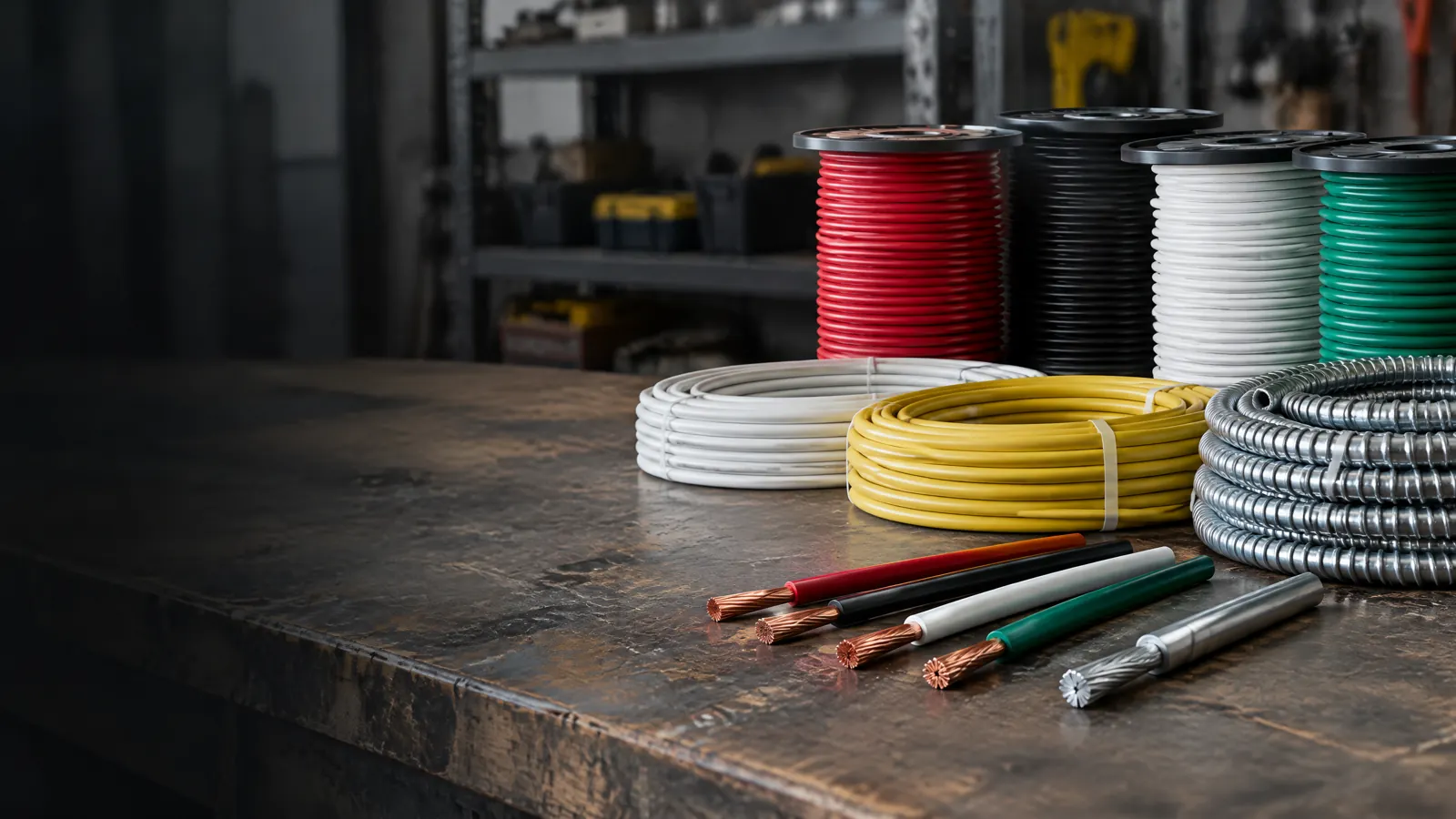
Surplus Copper THHN, THWN-2 & XHHW-2 Wire Buyers
Have copper building wire left after a project, sitting in distributor stock, or released from a plant storeroom? Surplus Valve Buyer invites electricians, contractors, distributors and inventory owners to request our wire and cable purchase review. This page focuses on copper THHN, THWN-2 and XHHW-2 conductors on documented reels or spools, including identifiable leftover continuous lengths. Tell us what the wire actually says, how much remains and where it is located. Call (951) 403-5738 or email industrial832@gmail.com to start. Photos are helpful but optional; a clear description is enough for an initial conversation. Every lot is reviewed before purchasing terms are proposed.
Prioritize the exact copper wire family
Start by separating copper THHN and THHN/THWN-2 building wire from copper XHHW-2. These are the priority families for this review, not interchangeable descriptions. Keep different sizes, insulation colors and type markings as separate inventory entries. Full reels, partial spools and unused project remnants should also be distinguished. A distributor's overstock list and a contractor's remaining feeder reels can both be presented without describing everything simply as copper cable.
THHN and XHHW-2 markings do not establish conductor metal by themselves. Confirm copper from the product identification or manufacturer records. Aluminum and copper-clad aluminum are different materials and must not be entered as copper. Fiber-optic cable is a separate category altogether. If a mixed lot includes armored, tray or other cable, identify it separately rather than applying this building-wire description to the whole lot.
THHN and THWN-2: read the complete marking
Copy the complete printed identification, not just the familiar THHN abbreviation. Southwire's documented copper THHN/THWN-2 product uses PVC insulation with a nylon sheath and carries a 600-volt rating. Its reference distinguishes THHN's dry-location rating from THWN-2's wet-or-dry rating. That distinction helps identify surplus; it is not an installation recommendation. Do not describe a reel as THWN-2 merely because someone calls it THHN. The actual product marking and supporting certification control.
Include the manufacturer, part number when available, insulation color and any additional printed ratings. A label showing THWN is not the same description as THWN-2. Similarly, additional tray, sunlight or other markings should be reported only when supported by the specific product. An original reel tag helps connect a loose conductor's printing to a catalog record, but a tag that no longer matches the contents needs an explanation.
Copper XHHW-2 needs its own identification
Copper XHHW-2 differs in insulation construction from the PVC-and-nylon THHN/THWN-2 example. Southwire describes its copper XHHW-2 product as a single conductor with thermoset cross-linked polyethylene, commonly abbreviated XLPE. Its referenced family has wet-and-dry temperature ratings of 90°C. These details explain why a buyer needs the precise designation instead of assuming that similar-looking feeder wire is the same product.
Record voltage directly from the printing and documentation. The referenced Southwire XHHW-2 family includes 600- or 1000-volt ratings for the listed sizes, while its RW90 rating is 600 volts. Do not assign 1000 volts to every XHHW-2 reel or transfer a rating between different markings. Catalog information supports identification; it does not establish the rating, condition or certification of an unknown surplus length.
Describe size, conductor count and remaining footage
Give the exact AWG or kcmil size from the marking, including distinctions such as 1 AWG versus 1/0 AWG. Larger sizes may appear on older inventory lists as MCM; preserve the original label wording so it can be reconciled with the documentation. State whether the copper conductor is solid or stranded if known. Strand count is not core count: many strands can make up one conductor. Identify a single-conductor reel as one conductor, not as a multi-core cable.
Report remaining continuous length per reel or spool, rather than only total footage across the lot. Three separate 200-foot lengths are different inventory from one 600-foot length. An original 1,000-foot reel label does not prove 1,000 feet remain after use. Indicate whether footage comes from a current inventory record, visible length markings or an estimate. Keep unknown quantities labeled unknown. A simple line such as 'copper THHN/THWN-2, 4/0 AWG, black, one conductor, 600 V, one partial reel, estimated 240 feet' is useful when supported by your material.
Reusable surplus is not the same as damaged scrap
This purchase review is oriented toward identifiable wire that may remain usable as product, not an assumed purchase by copper weight. Describe unused sealed stock, opened but unused reels, and leftover lengths separately. Disclose prior installation or removal rather than calling take-out wire new surplus. Readable markings, continuity of each length, storage history and insulation condition help distinguish a documented surplus opportunity from unidentified material.
Report cuts, crushed sections, exposed conductor, cracked insulation, heat damage, chemical exposure or other known problems. An intact outer appearance alone is not proof of electrical suitability, and this page provides no testing or installation approval. Keep damaged pieces separate from the usable inventory description. Burned wire, stripped copper and mixed short scrap are not automatically covered: scrap purchasing and recycling services are not offered through this page. An initial submission is a request for review, not an acceptance of the material.
Start a direct purchase review with Surplus Valve Buyer
Call (951) 403-5738 or email industrial832@gmail.com with the type marking, copper identification, size, voltage, color, conductor count and footage per reel. Add condition, reel quantity and the city and state where the lot is stored. Tell us whether you own the wire or are authorized to sell it for the owner. Contractors should clarify who owns project leftovers; distributors and plant teams should identify any release restrictions before offering inventory.
You do not need a complex form or a finished spreadsheet. If available, optional photos can show the printed wire marking, reel tag and overall condition. We can discuss identification gaps before evaluating purchasing fit. Any offer depends on the specific material, condition, quantity and location. Payment, transfer and transport arrangements must be agreed for the individual lot; contacting us does not reserve a pickup or commit either party to a sale.