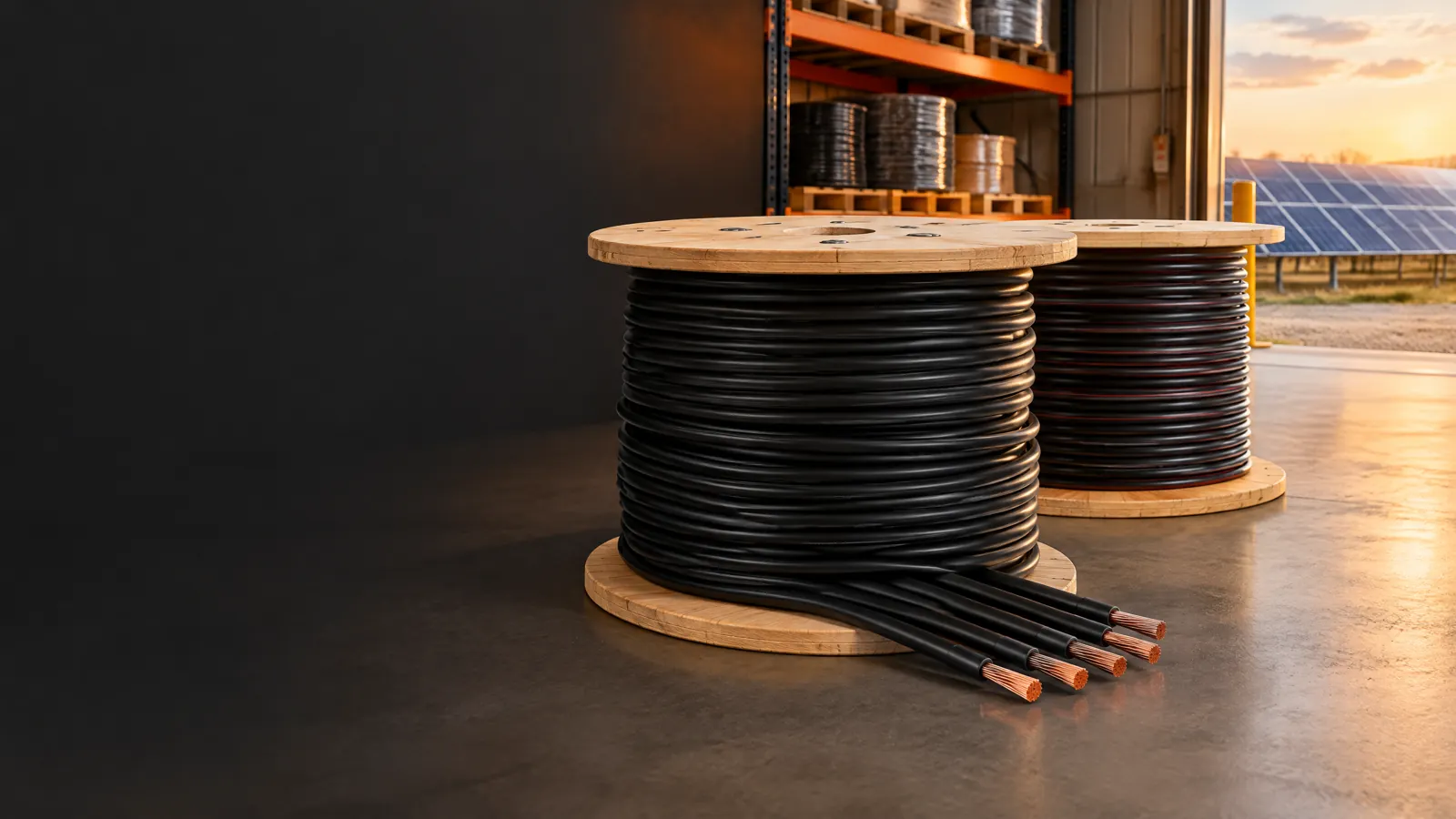
Solar PV Wire and Photovoltaic Project Cable Buyers
Have unused photovoltaic wire after a completed solar project, a design change or an inventory reduction? Surplus Valve Buyer invites electricians, contractors, distributors, plants and inventory owners to submit solar project wire and cable for purchase review. Start with identifiable PV Wire reels, unopened spools and documented continuous leftover lengths. We are reviewing material you want to sell, not offering cable for sale. Call or email using this website’s contact details; a short inventory description is enough to begin, and photos are optional.
Prioritize identifiable solar project wire
For a solar inventory review, lead with material actually marked Type PV or PV Wire. Separate these reels from USE-2 and from conductors carrying additional RHH or RHW-2 designations. List unused project overruns, full spools and partial reels individually rather than describing everything as solar cable. Black or red insulation alone does not identify the wire type, voltage or conductor material.
A photovoltaic project may also leave feeder, grounding, control, tray or medium-voltage cable. Include those as separate inventory lines with their own specifications. XHHW-2, THHN/THWN-2 and URD descriptions should not be substituted for a PV Wire designation. A project’s purpose does not give every cable the same rating, and a URD description alone does not establish direct-burial certification. Actual product markings and documentation control the review.
PV Wire versus USE-2: preserve the distinction
PV Wire is a photovoltaic wire designation associated with UL 4703, the Standard for Photovoltaic Wire. USE-2 is a separate wire designation; it should not be presented as identical to PV Wire simply because it came from a solar site. Manufacturer specifications show that products may carry several designations, making the complete printed legend more useful than a shortened inventory name.
Kris-Tech lists PV Wire options at 600V, 1000V and 2000V. Its separate RHW-2/USE-2 page includes a sample legend identifying USE-2 at 600V and another identifying RHW-2 at 2000V. Record which rating belongs to which designation. A 2000V entry for one type does not establish that every designation on a reel has that rating.
Southwire’s SPEC45411 is a specific single-conductor, 2000V copper PV product with XLPE insulation and RHH/RHW-2 identification. Its published features are evidence about that product, not every surplus solar cable. Neither a shared insulation material nor a similar appearance establishes interchangeability. This page helps identify inventory for purchase review; it does not advise on installation or approve a replacement cable.
What to read from the cable and reel label
Copy the manufacturer name, product or stock number, printed wire type, conductor size in AWG or kcmil, and voltage rating. Include temperature markings and any printed sunlight-resistant, direct-burial or flame-test designation. Preserve the exact listing or certification marks shown rather than describing the lot as certified without supporting identification. Do not assume optional manufacturer features are present on your particular reel.
Manufacturer references illustrate why full identification matters: Kris-Tech describes sunlight-resistance details that vary with size and color, while Southwire lists VW-1 as optional for the referenced PV product. If a label and the cable print disagree, disclose both. A photograph of the legend or label can help, but you may begin by transcribing it into an email.
Identify material, conductor count and remaining length
State whether the conductor is copper, aluminum or copper-clad aluminum. These are different materials, not interchangeable descriptions. If copper is tin-coated, preserve that detail from the specification instead of identifying it as aluminum by appearance. Fiber-optic cable belongs on a separate inventory line; it is not a metal power conductor. Report solid or stranded construction and strand count when documented.
PV Wire in the manufacturer references is single-conductor material. If your inventory contains multiconductor cable, give the core count and individual conductor sizes. A reel holding several separate single-conductor runs is different from a cable with several cores under one jacket. Identify which arrangement you have.
Give the remaining continuous length on each reel or spool and label estimates honestly. For example, three reels with approximately 800 feet each should not become one 2,400-foot continuous length. Original packaging footage is not necessarily the footage remaining after cuts. Keep separate lengths separate, and distinguish factory reel labels from your later inventory notes.
Reusable surplus is not the same as damaged scrap
Our wire and cable purchase review focuses on documented material that may remain reusable as wire or cable. Unused status, readable markings, intact insulation and continuous lengths help explain what is available. Opened packaging or a partial reel should be disclosed; neither automatically establishes acceptance or rejection.
Describe cracked or cut insulation, heat exposure, contamination, crushed packaging and missing identification. Separate short chopped pieces, stripped metal and damaged cable from the reusable inventory list. Scrap purchasing and recycling services are not confirmed here. Do not assume that a surplus review includes payment by metal weight, recycling, removal or acceptance of damaged material. Previously installed cable also needs a clear history rather than being described as unused project surplus.
Who can offer surplus photovoltaic cable?
Electricians and solar contractors may have leftovers after project closeout. Distributors may hold excess stock, while plants and inventory owners may have material purchased for deferred work. Explain whether the lot is unopened stock, unused field inventory or previously installed material, and identify who owns it. A contractor holding customer-owned cable needs authority from the owner before offering it for sale.
State the city and state where the inventory is located. Mention whether reels are together or spread across sites, and whether an inventory list is available. Surplus wire buyers review identifiable product inventory differently from metal recyclers. This page invites a product purchase review, not a guaranteed outlet for every solar-related item.
Begin with a phone call or simple email
Call or email Surplus Valve Buyer through the contact details on this website. Start with the printed type, conductor material, AWG or kcmil size, reel count, length per reel, condition, ownership and city. Add voltage and core count where applicable. An existing stock list or a few lines of text are welcome; photos are optional, and you do not need to assemble a complex submission package.
We can use that information to determine whether further purchase discussion is appropriate. Any offer, inspection requirements, payment terms and transfer arrangements must be agreed for the specific lot. Sending details does not automatically mean acceptance, and this page makes no promise of pickup timing or a fixed price.