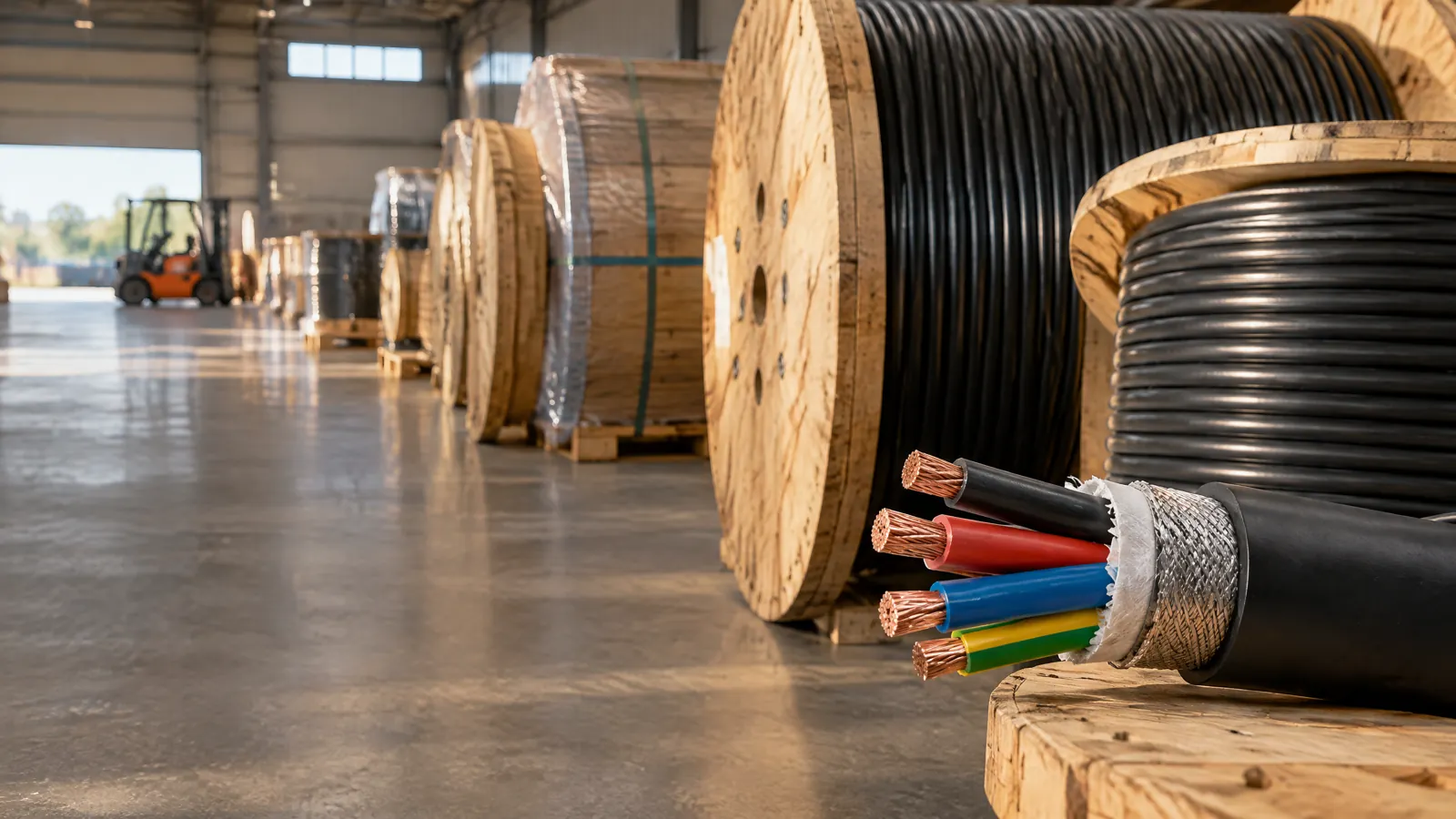
Control, Tray and Instrumentation Cable Surplus Buyers
Have control or instrumentation cable left after a project, plant upgrade or inventory cleanout? Surplus Valve Buyer invites a purchase review for identifiable TC, TC-ER, PLTC and ITC cable, including shielded twisted pairs and documented full or partial reels. Our focus is reusable surplus material, not a promised scrap transaction. Electricians, contractors, distributors, plants and inventory owners can call (951) 403-5738 or email industrial832@gmail.com with a simple description. Start with the printed cable type, size, remaining lengths, condition and city; photos are optional.
Prioritize the cable family printed on your stock
For this purchase review, start with multiconductor control and tray cable marked TC or TC-ER, then power-limited tray cable marked PLTC and instrumentation tray cable marked ITC. Include shielded single-pair and multipair inventory with its exact manufacturer part number. These are related industrial cable families, but the names are not interchangeable. A cable described only as 'control wire' needs more identification before its purchasing fit can be assessed.
TC means tray cable; the ER suffix identifies an exposed-run rating. PLTC identifies power-limited tray cable, while ITC identifies instrumentation tray cable. A product can carry several markings together. Copy all of them rather than choosing the most familiar one. Manufacturer documentation and the actual product marking control; this page does not determine installation suitability or provide wiring advice.
Read the jacket legend and reel label together
Record the manufacturer, catalog or stock number, conductor size in AWG or marked kcmil, conductor count, voltage and full type designation. Also preserve printed temperature, shield, sunlight-resistance or other rating information when present. The reel label and jacket legend should identify the same product. If a tag is missing or the reel has been reused, say so instead of treating the old label as proof of what is wound on it.
Do not reduce a multiply rated cable to one voltage. Belden's 1499A instrumentation cable, for example, lists 300 V for its PLTC designation and 150 V for ITC. That is a product-specific example, not a rule for every cable. Send the complete marking so different listings remain connected to their stated ratings.
Identify copper, core count and shielding accurately
State whether the current-carrying conductors are bare copper, tinned copper, aluminum or copper-clad aluminum. These materials are not equivalent. An aluminum foil shield does not make the conductors aluminum, and tinned copper is still copper beneath its coating. Southwire's shielded control-cable reference illustrates the distinction: bare copper conductors accompany aluminum-laminate foil and a tinned-copper braid. Fiber-optic cable is a separate category, not a substitute description for metallic instrumentation pairs.
Report conductors or cores separately from pairs. Twelve pairs describe twenty-four paired conductors, not twelve cores; additional ground, drain or communication wires must be identified separately. Tell us whether shielding is overall, individual around each pair, or both. Belden 1499A has 36 pairs of 16 AWG conductors plus a separate 22 AWG communication wire. Such details prevent a short catalog description from being mistaken for mixed-gauge pairs.
Give remaining footage for each reel or spool
A lot total does not show usable continuous lengths. Five partial reels totaling 1,000 feet are different inventory from one continuous 1,000-foot reel. List each reel separately with the product identity and remaining feet or meters. Include leftover lengths that are no longer on their original spool, but explain whether each length is continuous, coiled, cut into pieces or joined. Do not describe several separate pieces as one continuous run.
Use remaining footage, not the original factory reel quantity, after cable has been cut. Identify the basis for your number: an inventory record, documented cuts, sequential footage markings or an estimate. If only an estimate is available, label it clearly. Length, quantity and documentation help assess the lot; no universal minimum length or automatic purchase threshold is promised.
Separate unused surplus from damaged or removed cable
Unused project overruns, canceled-order reels and traceable storeroom stock are the starting point for a reusable-surplus review. An opened reel or partial spool is not automatically scrap, but its identity, remaining length and condition still matter. Tell us when the cable was acquired, how it was stored and whether its ends were protected. Visible jacket damage, crushed sections, exposed conductors, water exposure or missing identification should be disclosed rather than hidden within a general 'good condition' description.
Previously installed cable needs a separate condition statement. Explain whether it was pulled from service, cut during removal or exposed to chemicals or heat. A sound-looking outer jacket is not proof that every internal component is intact. Burned wire, stripped conductors, shredded cable and mixed short damaged pieces are different from reusable surplus reels. Scrap buying and recycling services are not confirmed here; do not assume damaged material qualifies for purchase.
Who can submit industrial cable inventory?
Electrical contractors and electricians can submit documented closeout reels and leftover lengths. Distributors can identify unused overstock by part number and quantity. Plants can separate maintenance spares from cable removed during a shutdown. Inventory owners and asset-recovery teams can organize mixed lots by cable family rather than sending one undifferentiated weight total.
Confirm that you own the cable or have authority to sell it. Include the city and state or province where it is stored, whether it remains on a jobsite and any removal deadline. Location describes the inventory; it does not imply that we have a local warehouse or that pickup is guaranteed.
Request our wire and cable purchase review
Call Surplus Valve Buyer at (951) 403-5738 or email industrial832@gmail.com. A short message or existing stock list is enough to begin: provide the cable markings, conductor material and size, core or pair count, shielding, voltage, length per reel, condition, ownership and city. You do not need to complete a complex technical form. Optional photos can show the printed legend, reel label and overall condition without replacing an honest description.
We review the identified material for purchasing fit. Missing specifications may need clarification before an offer can be considered. Any proposed purchase depends on the particular inventory, condition, quantity and current demand. Price, inspection, payment and transport arrangements must be agreed for the actual lot; a submission is not automatic acceptance or a pickup commitment. Keep reusable reels and damaged scrap clearly separated in your description.