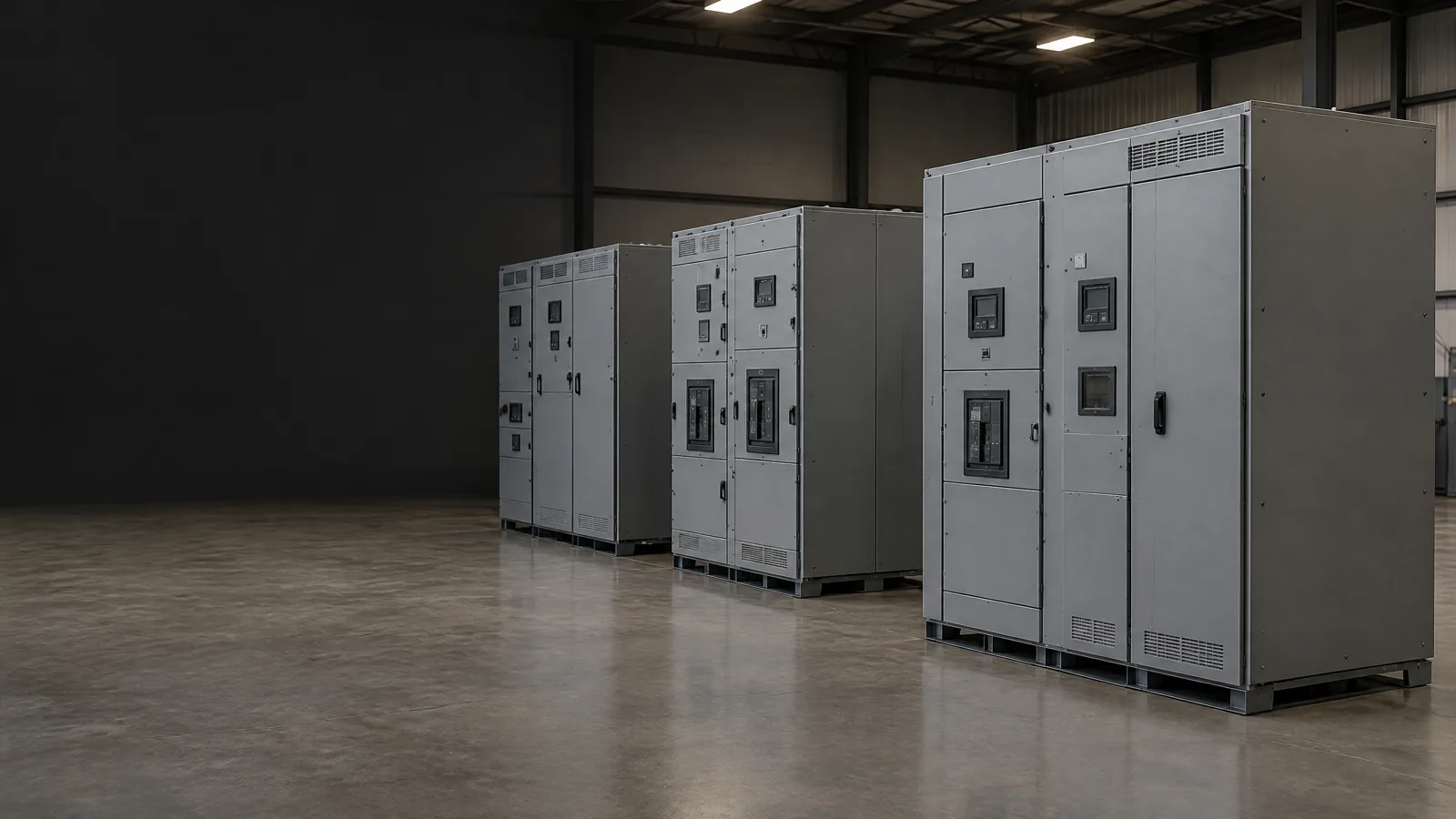
Siemens Switchgear Buyers
Surplus Valve Buyer buys surplus industrial equipment and welcomes inquiries from sellers with Siemens switchgear. If your facility has an unused WL lineup, retired GM-SG sections or separately stored breakers, discuss the actual lot with our Houston-based independent buying business. We buy; you sell. Start with the equipment family, quantity, condition and location. Purchase eligibility and terms are confirmed for each lot, rather than assumed from the Siemens name alone.
Sell the Siemens Equipment You Actually Have
A useful selling inquiry distinguishes an entire switchgear assembly from an individual breaker or an empty section. Describe whether your lot includes main and feeder sections, installed breakers, spare drawout units or cabinets with missing equipment. If several lineups are being retired, identify each one separately instead of combining different ratings into one description.
You do not need a complete technical dossier to call. Begin with what is already known, including whether the equipment is unused, previously installed or still awaiting decommissioning. Clarify ownership and who can authorize the sale. Existing records can help define the lot before anyone considers removal or a purchase agreement.
WL Low-Voltage Switchgear: Assembly and Breaker Details
Siemens identifies Type WL as low-voltage metal-enclosed switchgear built around WL breakers. Its selection guide lists a 635 VAC maximum assembly rating and horizontal and vertical bus options of 1,600, 2,000, 3,200, 4,000, 5,000 and 6,000 amperes. These are published family examples, not a promise that every configuration or older lineup has those ratings.
For a WL lot, report the assembly bus rating separately from each breaker's frame rating, rating plug and electronic trip unit. Siemens explains that the rating plug determines breaker rated current up to the frame maximum. A feeder breaker marked with a lower current does not establish the continuous rating of the entire lineup.
GM-SG Metal-Clad Switchgear Needs Its Own Identification
GM-SG is Siemens air-insulated, medium-voltage metal-clad switchgear using horizontal drawout GMSG vacuum circuit breakers. GM-SG names the assembly family; GMSG identifies the breaker family. Record both where available. Identify the enclosure designation too, because conventional GM-SG and arc-resistant GM-SG-AR are different constructions. Do not describe ordinary GM-SG as arc-resistant simply because it has enclosed compartments.
The manufacturer's guide includes maximum design-voltage ratings such as 4.76, 8.25 and 27 kV. Its 27 kV table lists self-cooled main bus options of 1,200, 2,000, 2,500 and 3,000 A, with enclosure restrictions. Do not transfer a lower-voltage lineup's published 4,000 A bus option to a 27 kV assembly.
SIMOVAC Is Medium-Voltage Motor Control
SIMOVAC and SIMOVAC-AR are medium-voltage controller families, not alternative names for GM-SG circuit-breaker switchgear. Siemens describes an integrated arrangement using vacuum contactors and associated components. If your surplus includes SIMOVAC equipment, describe it as motor-control equipment and ask about that lot separately. This avoids presenting contactor-based controllers as interchangeable switchgear sections.
The guide lists assembly maximum voltages of 5.0 and 7.65 kV. Controller current depends on enclosure and position: a one-high 12SVC400 can be rated 400 A, while a one-high 12SVC800 can be rated 720 A in the listed non-Type-12 arrangements. Type-12 and two-high arrangements have different limits. Neither figure is the lineup's main bus rating.
Keep Voltage, Bus Amps and Fault Ratings Separate
Your facility's nominal system voltage is not the same information as an assembly's maximum voltage rating. Continuous bus amperes describe normal current-carrying capacity; breaker frame and trip details describe the individual protective device. Fault ratings expressed in kA concern short-circuit duties. Preserve the label's wording, including whether the figure is interrupting, momentary or short-time withstand current.
Basic impulse insulation level, commonly called BIL, is another separate rating. For example, Siemens lists 95 kV peak BIL for the GM-SG 8.25 kV maximum-design-voltage row. That does not make it a 95 kV operating-voltage assembly. Accurate descriptions keep a seller's lot from being evaluated against the wrong equipment category.
Serial Numbers and Age Without Obsolescence Assumptions
Share the assembly serial or order number and any manufacturing year explicitly printed in your records. Keep breaker identifiers separate. If the year is unknown, say so rather than decoding a serial number by guesswork. Original drawings, purchase records and service documents can help connect the equipment description to the particular lineup you own.
A facility retirement date is not a product discontinuation date. Siemens currently presents WL and GM-SG on official product pages, but that alone does not establish production or support status for every older component. Describe any documented modification, replacement trip unit or missing original identification. We do not claim manufacturer affiliation, authenticity certification or automatic compatibility with another Siemens lineup.
Explain Completeness and Condition Before Pricing
Tell us whether breakers are included and whether the lot retains its doors, barriers, shutters, bus connections and control components. Mention corrosion, moisture exposure, visible damage or missing parts that are already known. Separate unused project surplus from used equipment and from items with unknown operating history; those descriptions should not be blended into a single condition claim.
Existing maintenance or test reports may be useful if available, but do not describe an untested item as tested or certified. Do not disassemble equipment merely to prepare an inquiry. Lot-specific discussion determines whether the equipment is eligible for purchase and what additional information is needed; neither age nor a family rating guarantees an offer.
Plan Safe Decommissioning and Lot Logistics
Tell us whether the equipment remains connected, is safely decommissioned or is already stored. Never open energized gear or perform live tests for a selling inquiry. Qualified personnel must handle isolation, de-energization, grounding where required and removal under the applicable procedures. Siemens' GM-SG manual warns against contact with energized conductors and requires de-energizing and grounding before work on or near high-voltage conductors.
Discuss site access, section count, existing shipping splits and available dimensions before agreeing on handling arrangements. Confirm who is responsible for decommissioning, rigging, loading and transport. Freight coverage, removal services and payment arrangements are not blanket promises on this page; the responsibilities and terms must be agreed for your lot.
Talk to a Buyer, Not a Switchgear Store
If you are asking who buys used Siemens switchgear, this page is for equipment owners selling surplus, not shoppers ordering replacement gear. Surplus Valve Buyer is Houston-based and independent. Call (951)403-5738 or email industrial832@gmail.com with the family name, approximate quantity, condition and equipment location. We can begin even when some technical details are still unknown.
State whether you want to sell a complete lineup or a defined group of sections and breakers. Purchase eligibility and transaction terms are confirmed per lot. Pricing and acceptance depend on the actual equipment, and no offer deadline is promised. The next step is a straightforward conversation about your Siemens equipment.