5 kV Switchgear Buyers
Surplus Valve Buyer buys surplus 5 kV switchgear from owners retiring equipment, clearing project surplus or reducing spare holdings. We are a Houston-based independent surplus buyer, not a manufacturer or an authorized compatibility authority. Tell us whether you are selling a complete lineup, separate sections or loose vacuum breakers. Eligibility and purchase terms are confirmed for each lot, based on its actual identity, condition and included equipment.
Separate 5 kV class from system voltage
A plant may call its equipment 4.16 kV switchgear because that is the nominal system voltage. The equipment can carry a different maximum rating: Siemens documents a nominal 4.16 kV class alongside a 4.76 kV maximum design voltage. Preserve both descriptions when presenting your surplus rather than treating them as conflicting labels.
Eaton's 5 kV-class voltage-transformer data also references 4160 V and 2400 V systems, with connection-specific limitations. A history of service on a 2.4 kV system does not establish suitability for another installation. Share the original system voltage and assembly nameplate separately; neither the page title nor the voltage class guarantees compatibility.
Describe the lineup before counting cabinets
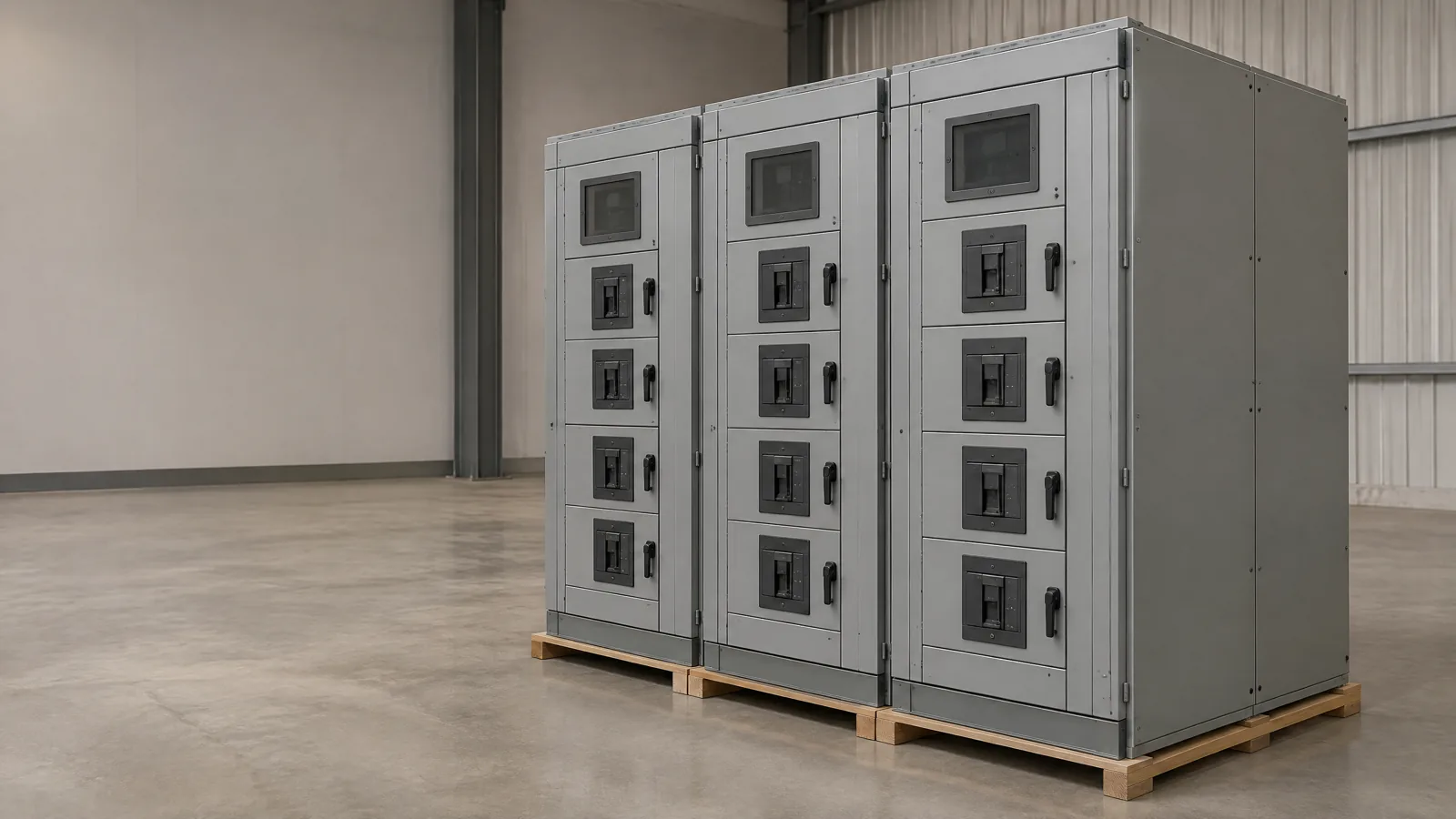
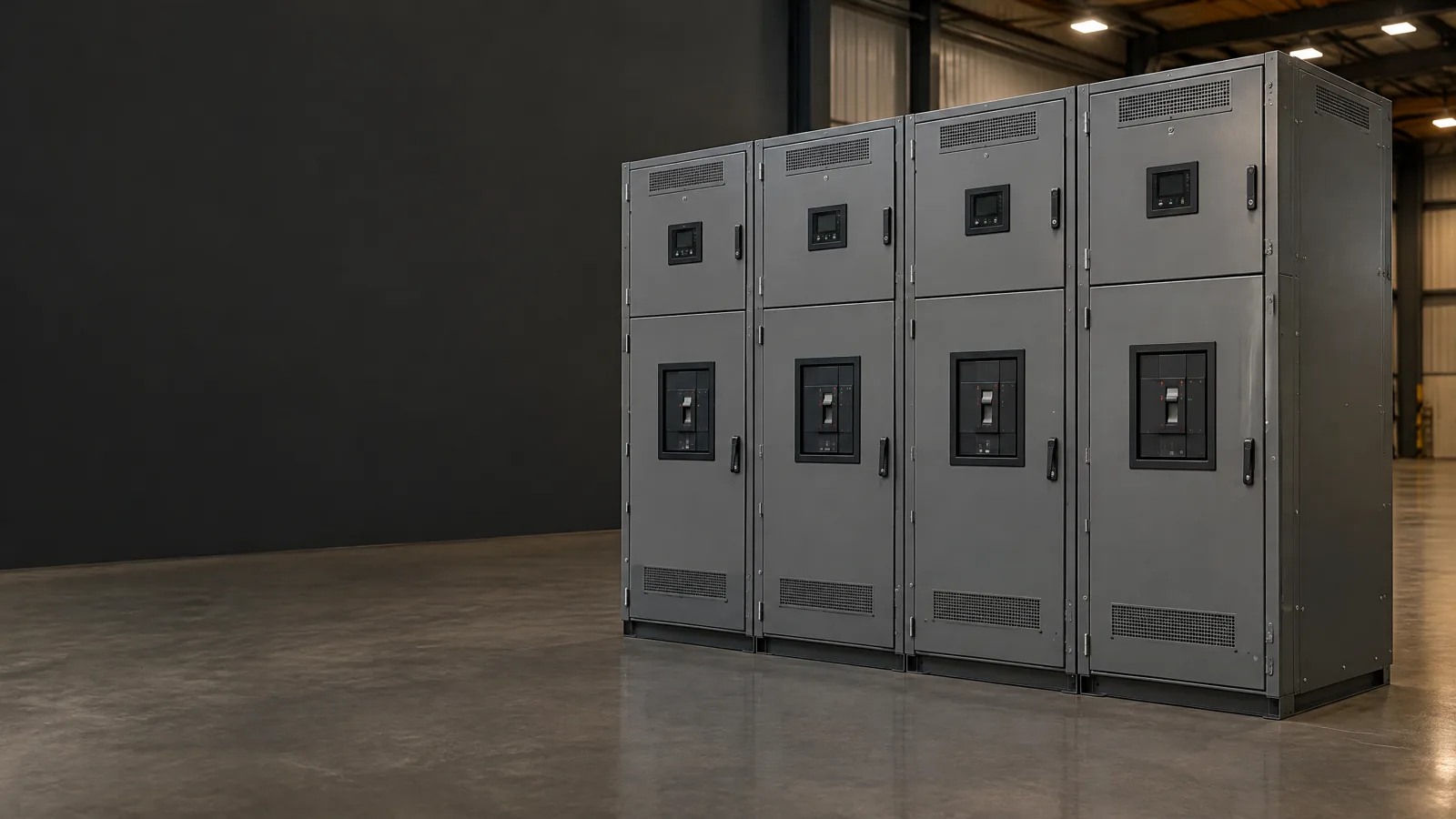
For a lineup, identify the incoming main, any bus tie, feeder sections and auxiliary compartments. State whether all original sections remain together and whether the equipment is still assembled or separated for storage. A one-line drawing helps explain the arrangement more clearly than a cabinet count alone.
Eaton's published layouts distinguish mains, ties, feeders, bus voltage transformers and line control-power equipment. Use those functions to describe what your lot actually includes. Note missing breaker trucks, removed relay doors, absent bus links or sections sold previously. Complete and incomplete lots should be described differently; a row of cabinets is not automatically a complete operating system.
Identify each vacuum breaker family
Record the manufacturer, complete type designation, serial number and quantity of breakers included. Eaton's VacClad-W guide identifies VCP-W, VCP-WC and VCP-WG families, while Siemens publishes 5 kV GMSG vacuum breaker data. These are useful identification examples, not a list of automatically accepted models or interchangeable designs.
Separate installed breakers from loose spares and identify the associated cell where records permit. Preserve details about the truck, secondary disconnects and original controls. A vacuum interrupter description alone is not enough to establish a match. Do not assume a breaker fits because its voltage and continuous-current numbers resemble those of another unit.
Keep bus amperes and trip settings separate
The continuous main-bus rating describes the assembly's current-carrying rating. A breaker has its own continuous-current rating, and the protection settings are another field. Eaton's assembly tables include 1200 A and 2000 A examples; those numbers are not universal purchase requirements and do not establish which breakers belong in your lineup.
Copy a breaker frame designation if one is marked, but do not substitute a relay pickup or trip setting for its continuous-current rating. If drawings and labels disagree, report both and identify their origins. Manufacturer tables also include cooling qualifications on some higher-current configurations, so retain the relevant notes rather than quoting an isolated ampere value.
Retain fault ratings and insulation labels
Fault-duty information belongs beside, not inside, the continuous-ampere description. Record the marked interrupting current in kA and whether it is symmetrical, plus the assembly short-time withstand rating when available. Closing-and-latching ratings are separate again. Do not describe a 25 kA interrupting rating as a 25,000 A continuous bus rating.
BIL, the basic lightning impulse insulation level, is an insulation-withstand value rather than the operating system voltage. Eaton lists a 60 kV impulse-withstand example for its 4.76 kV assembly. Siemens also documents older MVA-class and newer constant-kA rating structures. Preserve historical labels; do not convert MVA to kA without the applicable manufacturer's rating basis.
Inventory relays and instrument transformers
Identify protective relay models and say whether the devices remain installed. Available settings files, wiring drawings and modification records help explain the protection package, but their presence is not proof that a future installation is suitable. Describe removed relays explicitly instead of calling a stripped control compartment complete.
List known current-transformer ratios and voltage-transformer ratios with their associated sections. Eaton describes these instrument transformers as part of the metering and protection arrangement. Distinguish a missing device from an undocumented one. Sellers can begin with existing records; obtaining additional details must not involve opening energized compartments or disturbing secondary circuits.
Specify close, trip and motor control power
Control power is not the same as the medium-voltage circuit rating. Record AC or DC, the stated voltage, and the spring-charging motor, closing and tripping arrangements separately. Eaton documents several control-voltage options; Siemens shows GMSG configurations with 125 VDC controls, capacitor-trip arrangements and mixed AC motor/close with DC trip.
One control-voltage label may therefore leave important details unresolved. Say whether control-power equipment, related fuses and any separately stored control components belong to the sale. Include known changes from the original schematic. Matching the nominal 5 kV class does not establish that control wiring, trip coils or secondary connections will match another installation.
Explain condition without creating new hazards
State whether the gear is unused project surplus, a retired service lineup or equipment with an unknown history. Disclose known water exposure, corrosion, damaged insulation and missing components. Existing maintenance or test reports can provide context, but an old report should not be presented as a current condition guarantee.
Do not energize surplus gear, open live compartments or operate breakers to create a sales demonstration. Qualified personnel must manage safe decommissioning under the applicable procedures. OSHA distinguishes properly isolated, verified equipment from equipment merely switched off. Tell us its current status and use existing documentation until any further inspection can be performed safely.
Discuss the lot and its sale terms
Call (951)403-5738 or email industrial832@gmail.com with a brief description of the switchgear, its location and what is included. If available, add the assembly type, section count and breaker inventory. Surplus Valve Buyer is buying your equipment; this page is not an inventory listing for people seeking to purchase a replacement lineup.
Explain whether the lot remains installed, is disconnected or is already staged, and identify any access or release-date constraints. Eligibility, price, payment arrangements, removal responsibilities and transportation terms must be agreed for the specific lot. There is no blanket acceptance promise, freight commitment or guaranteed offer timetable. A clear description makes those discussions more useful.