2000 Amp Switchgear Buyers
Have a retired distribution lineup or unused project gear marked 2000A? Surplus Valve Buyer is a Houston-based independent surplus buyer. We buy surplus switchgear through lot-specific review, starting with what the rating actually identifies. A complete assembly, a partial lineup and a loose 2000 amp breaker are different sale lots. Tell us which you have, its location and what remains included; eligibility and purchase terms are confirmed for each lot.
Does 2000A Describe the Assembly or Breaker?
Start with the assembly nameplate or existing equipment schedule, not just the number on the largest breaker. Eaton's Magnum DS guide lists cross-bus ampacity separately from breaker ratings. A 2000A breaker label therefore does not establish that the entire lineup has a 2000A continuous main bus. Record the assembly manufacturer, series, serial number and bus rating when those details are available.
Describe the sale boundary clearly: complete connected lineup, individual shipping sections, empty cabinets with bus, or a breaker removed from its cell. If the assembly label is missing, say so rather than treating a breaker marking as proof. Drawings and original schedules can help resolve identification, but unresolved ratings should remain identified as unknown.
Identify Voltage Without Guessing from Amperage
2000 amps describes current, not voltage class. Record nominal system voltage and the assembly's marked maximum voltage separately. For example, Eaton's Magnum DS voltage table distinguishes a 480 V system entry from a 508 V maximum voltage entry. This is a manufacturer example, not an automatic rating for every 2000A assembly or an acceptance promise.
Medium-voltage equipment needs its own identification. Siemens documents medium-voltage main bus ratings and separately tabulates maximum design voltage, interrupting current and insulation levels. Include the actual equipment designation, frequency and phase information. Do not convert a site voltage into an assumed assembly rating, or describe low-voltage and medium-voltage lineups as interchangeable because both carry a 2000A marking.
Separate Bus Amps, Trip Settings and Fault Ratings
For each included breaker, distinguish frame rating from its installed rating plug or sensor and configured trip information. Siemens' WL tables show frame ratings and rating-plug ranges as separate entries. A protective setting below 2000A should not be rewritten as the assembly's continuous bus rating. Keep the original labels and setting records associated with the correct breaker.
Fault ratings use different units and describe different duties. Breaker interrupting kA and assembly short-time withstand or bus bracing kA are not continuous load amperes. For medium-voltage gear, BIL is an impulse insulation withstand rating expressed in kV, not the normal operating voltage. Copy the marked rating and its description together rather than submitting an unexplained number.
Describe the Main-Tie-Main Lineup
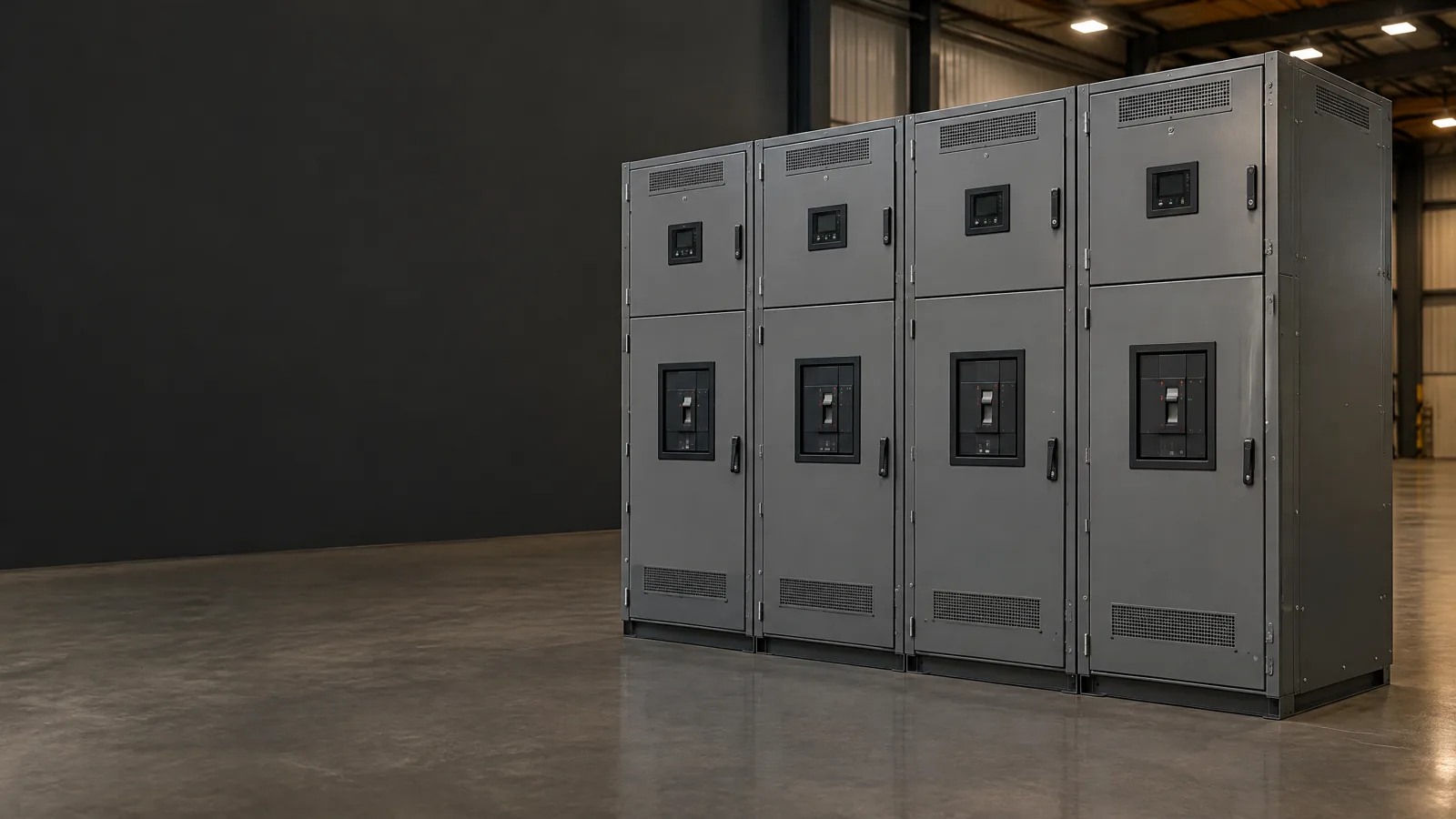
A main-tie-main arrangement has two incoming mains and a tie linking bus sections. Eaton publishes layouts that distinguish main, tie and feeder positions. For your sale lot, identify each position by section number and breaker model. Do not report one 2000A main and assume that the second main, tie or both bus sections carry identical ratings.
Include the single-line drawing and any existing sequence-of-operation documents. State whether transfer controls, interlocks and associated wiring remain with the lineup. The layout name alone does not prove an automatic transfer scheme is present or functional. If a main or tie breaker was retained for another project, disclose that omission before describing the remaining sections as a complete system.
Account for Missing Feeders and Controls
Count installed feeder breakers and identify empty cells separately. Eaton notes that an unused cell can be a blank or a provision for a future breaker. An empty opening is not enough to tell which applies. Use existing drawings or safe inspection records to describe the cell and any retained cassette, connections, covers or accessories.
List removed trip units, protective relays, meters, control-power components and disconnected control wiring. Include spare breakers only when they belong to the sale and can be identified. A matching ampere number alone does not establish breaker-to-cell compatibility. We need to understand the actual package being offered, including items excluded by the owner, so discussion of the assembly does not overlook components already sold elsewhere.
Use Condition Records, Not Working Assumptions
Tell us whether the gear is unused, previously installed, removed from service or stored after removal. Keep the shutdown date, storage history and known defects together. Disclose water exposure, corrosion, damaged insulation, overheating evidence, missing doors and modifications. Previously operating equipment should not be described as currently tested merely because it worked before a shutdown.
Existing maintenance and test reports are useful when their dates, equipment identifiers and scope are clear. Supply those records if available, without commissioning a live demonstration for a sale inquiry. Do not open energized compartments, operate the lineup or attempt electrical testing to gather selling details. Qualified personnel must handle safe decommissioning and any necessary inspection under applicable isolation and lockout procedures.
Record Dimensions and Section Boundaries
Record overall width, height and depth from existing drawings or measurements that can be obtained safely. Add the number of sections and dimensions of any separated shipping groups. Siemens' dimension notes distinguish floor footprint from doors, enclosure overhangs and other extensions. A cabinet width alone can leave out parts that matter when planning removal and transport.
State whether the sections are still connected, whether original shipping splits are identified, and which bus splice pieces or control connections remain. Give documented weights when available and label estimates as estimates. Describe doorways, loading access and the equipment's current placement without assuming that pickup, dismantling or rigging is included. Those responsibilities must be agreed for the particular sale.
Keep Drawings with the Equipment They Identify
An equipment schedule, single-line diagram, factory outline and breaker inventory answer different questions. Keep the drawing revision and assembly identifier visible so an older plan is not mistaken for the final installed configuration. Explain deviations such as added feeders, changed trip units or sections removed before the sale.
Manufacturer literature helps interpret labels, but it does not establish your specific lot's condition or original options. Eaton distinguishes assembly standards from breaker standards in its design guide. Preserve the actual assembly designation rather than relabeling any large 2000 amp cabinet as switchgear. If the paperwork calls it a switchboard, use that description when contacting us.
Discuss the Defined Lot Before Removal
Contact Surplus Valve Buyer with the manufacturer, verified ratings, completeness and location you already know. Explain who owns the equipment and whether removal is scheduled or finished. You can start by telephone or email; missing information can be identified during the discussion. Clearly stating unknowns is more useful than guessing from similar equipment advertised online.
Eligibility, price, payment arrangements, removal responsibility and transport terms are confirmed per lot. An ampere label alone does not establish an offer or acceptance. If the proposed package changes because a breaker or control panel is retained, update the inventory before agreeing to the sale. Keep the lot description specific enough that both parties know which sections, breakers and accessories are included.