Sell Surplus Industrial Power and Medium-Voltage Cable
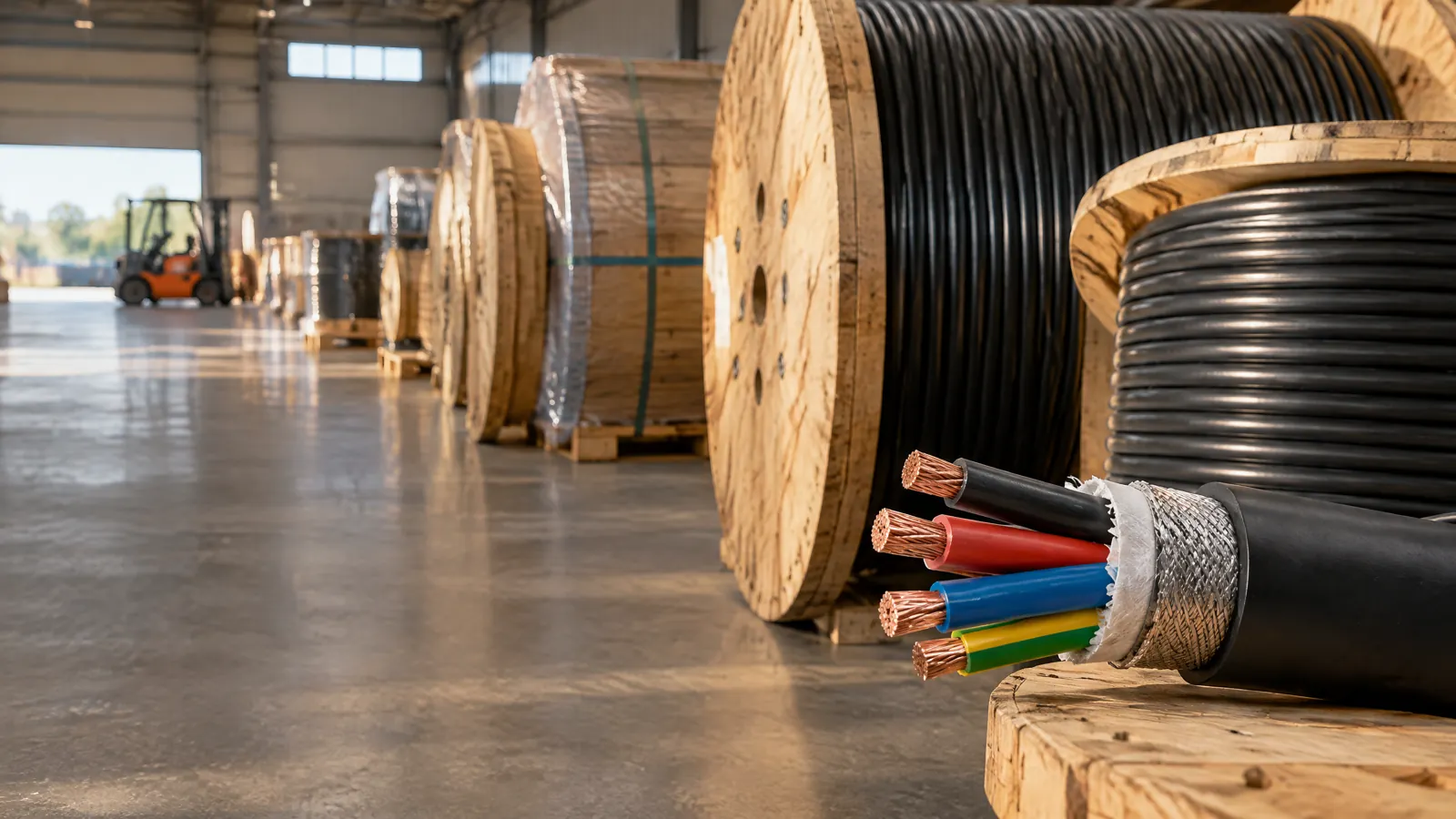
Surplus Valve Buyer reviews industrial power cable offered by electricians, contractors, distributors, plants, and inventory owners. Start with shielded medium-voltage cable, armored power cable, feeder cable, or tray power cable that remains identifiable on reels, spools, or continuous leftover lengths. Our wire and cable purchase review focuses on documented material that may have a reuse opportunity, not an assumed scrap-metal transaction. Tell us what the cable markings say, how much remains, its condition, and where you own or manage the inventory. Call (951) 403-5738 or email industrial832@gmail.com; photos are optional.
Power cable families to identify first
Begin with shielded medium-voltage, or MV, power cable. Identify single-conductor reels separately from multiconductor cable, and retain the printed voltage and insulation-level information. EPR and XLPE are insulation descriptions that appear in this market; neither identifies the conductor metal. A lot described only as heavy electrical cable needs more detail before a meaningful purchase review.
Next, identify armored power cable, including products marked MC or MC-HL. Armored does not automatically mean low voltage. Industrial feeder and tray power cable can also be submitted, but keep each marked cable family separate. If your inventory includes building wire, utility cable, control cable, or fiber, list those separately rather than treating every spool as the same power-cable product.
Shielded medium-voltage cable: read the complete identification
For MV cable, report the manufacturer, product or specification number, conductor size, conductor count, voltage, insulation description, and insulation level exactly as documented. Markings such as 15 kV, MV-105, and 100% or 133% insulation level describe different attributes. Preserve them as separate details instead of reducing the description to a voltage alone. If a label is incomplete, say which information is missing.
Shield material is not necessarily conductor material. Southwire documents a 15 kV product with an aluminum conductor, NL-EPR insulation, a copper tape shield, and a PVC jacket. Calling that product copper cable because copper is visible in the shield would misidentify it. Record tape shielding or concentric-neutral construction when documented, along with any available reel label or matching manufacturer specification.
Armored power cable needs both electrical and construction details
Report the actual MC or MC-HL marking, voltage, number of insulated conductors, conductor metal, and armor description. Shielding and armor are separate construction features; do not use those terms interchangeably. If the cable includes grounding conductors, identify them separately from the main insulated conductor count using the manufacturer description. Three-conductor power cable should not become four-conductor cable merely because a grounding conductor is present.
Okonite's catalog includes three-conductor, copper-tape-shielded 15 kV armored products with copper conductors, offered in different insulation levels and with MC or MC-HL designations. Those distinctions help explain why an armored reel cannot be evaluated from appearance alone. Manufacturer and product names identify the material only; they remain the property of their respective owners and imply no affiliation or authorized-distributor status.
Describe each reel, not just the total footage
Give the remaining continuous length on each reel or spool, its unit of measurement, and whether that figure is confirmed or estimated. An original reel tag may describe the quantity shipped before cable was used. If footage was removed, distinguish the original quantity from what remains. Two separate leftover lengths are not one continuous length, even when their combined footage looks substantial.
Pair each length with conductor material, AWG or kcmil size, core count, and voltage. Copy older MCM notation if that is what the label shows. Copper, aluminum, and copper-clad aluminum are different identities; do not substitute one for another. Optical fiber is a separate product family, not a metallic power conductor. For mixed inventories, a simple email list with one line per reel is sufficient.
Reusable surplus is different from damaged scrap
Unused warehouse stock, project overruns, partial reels, and identifiable continuous leftovers are useful starting points for a reuse-focused review. Describe whether cable is unopened, unused but stored, or previously installed and removed. Include storage history if known, and disclose visible jacket cuts, crushed armor, exposed conductors, corrosion, fire damage, missing labels, or uncertain length. An intact-looking reel is not proof of its electrical condition.
Short chopped pieces, stripped conductor, burned cable, and badly damaged mixed material should not be described as reusable surplus. Scrap purchasing and recycling capability are not confirmed for our wire and cable review. There is no published minimum footage or automatic acceptance rule here. Eligibility depends on the documented cable identity, usable length, condition, quantity, and purchasing fit; do not remove insulation or cut samples to make a submission.
Who buys surplus wire, and what should an owner provide?
A surplus equipment buyer reviews identifiable cable as inventory, while a scrap-focused transaction evaluates a different disposition route. Surplus Valve Buyer invites purchase reviews from electrical contractors closing projects, electricians with leftover reels, distributors clearing stock, and plants releasing unused spares. This is a request to purchase your material, not a retail listing of cable for sale or a commitment to buy every lot.
State who owns the inventory and whether you are authorized to sell it. Include the city and state or province, reel quantity, and any release deadline. Mention whether the reels are stored in a warehouse, plant storeroom, or project laydown area. Ownership and location help define the proposed transaction without requiring a lengthy form or unsupported assumptions about local collection facilities.
Request a wire and cable purchase review
Call (951) 403-5738 or email industrial832@gmail.com with the cable description, remaining length per reel, condition, ownership, and city. Start with what you know and label unknown details honestly. Optional photos of accessible reel tags, jacket print, and the overall lot can clarify the description; an existing inventory list or manufacturer data sheet can also help. No photo upload is required to make initial contact.
The next step is to clarify the material and determine whether a purchase offer is appropriate. Any offer, payment terms, and transport arrangements must be agreed for the particular lot. Do not assume acceptance, a fixed price, or pickup before those details are confirmed. Keep specification identification separate from installation suitability: actual cable markings and applicable certification control, not a broad family name or this purchase-review page.